The Shilajit buyer’s guide
Real Shilajit is easy to fake. Here’s how to check.
Plain-English guides to testing, sourcing and buying Shilajit, published by Minerals Pitch.
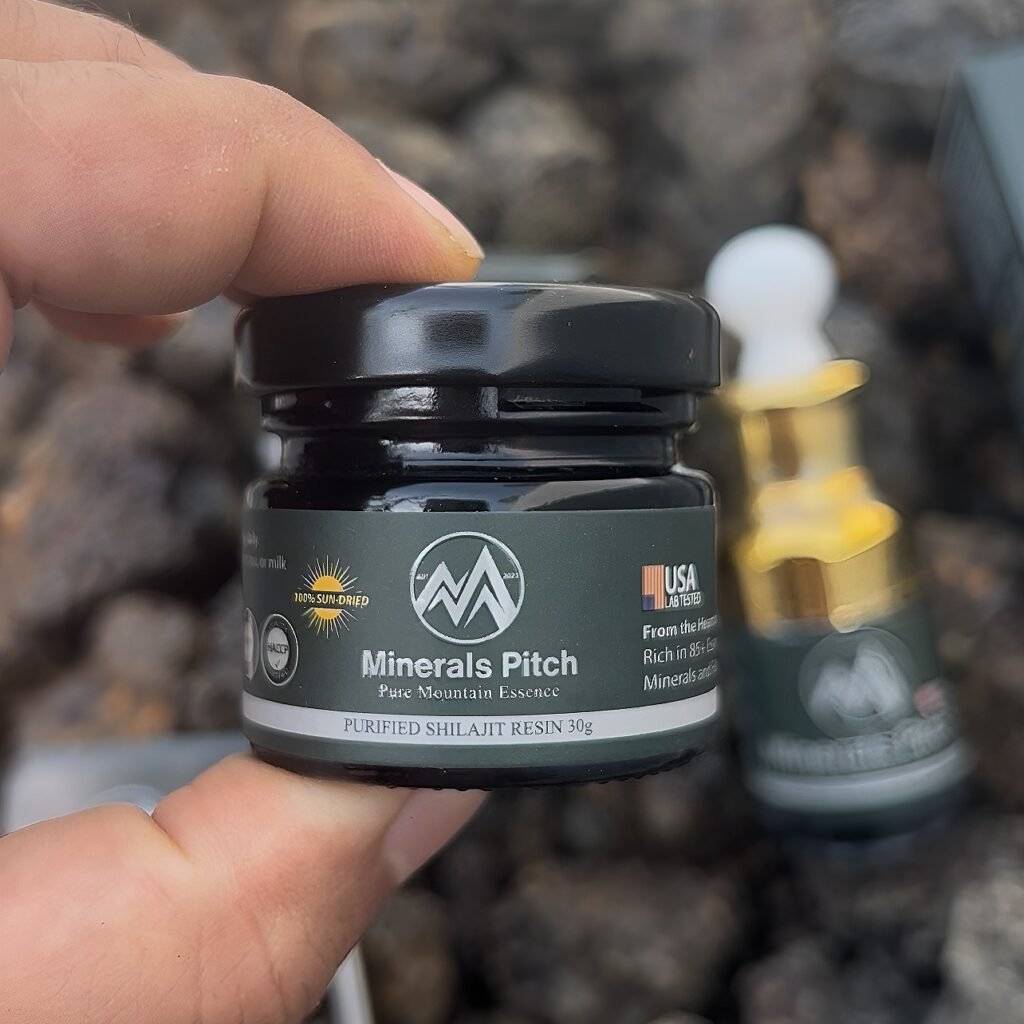
Four checks before you buy from any brand
Hold every seller to the same standard, including us. If a brand can’t answer these clearly, keep looking.
1. Lab reports
Can you read the actual report, with the lab’s name on it? “Lab tested” on a label tells you very little without one.
2. Origin
“Himalayan” covers a huge area. Ask which region it came from and who collected and purified it.
3. Ingredients
Read the full list. Added flavours, sweeteners or carriers aren’t always a problem, but you should know they’re there.
4. Batch tracing
Look for a batch number on the jar, then ask for the report that matches it. A report from a different batch proves far less.
How to test Shilajit at home
You can learn a lot from a glass of warm water and your own senses. Start with the dissolving test, because it’s the most useful check you can do at home.
Step 1: The dissolving test
Stir a small piece into warm water. Pure Shilajit should dissolve fully, with no grit or residue left at the bottom. But this doesn’t prove it’s authentic, because some fake chemical products dissolve just as well.
Step 2: Smell and taste
Next, check the smell and take a small taste. Look for an earthy smell and a taste a bit like burnt coffee. If both are there, you can have more confidence that it’s the real thing.
Step 3: Check the lab results
Safety is the one thing you can’t test at home. No human eye can tell you a Shilajit is safe. Only lab results can confirm that, so check them even if your jar passes the first two steps.
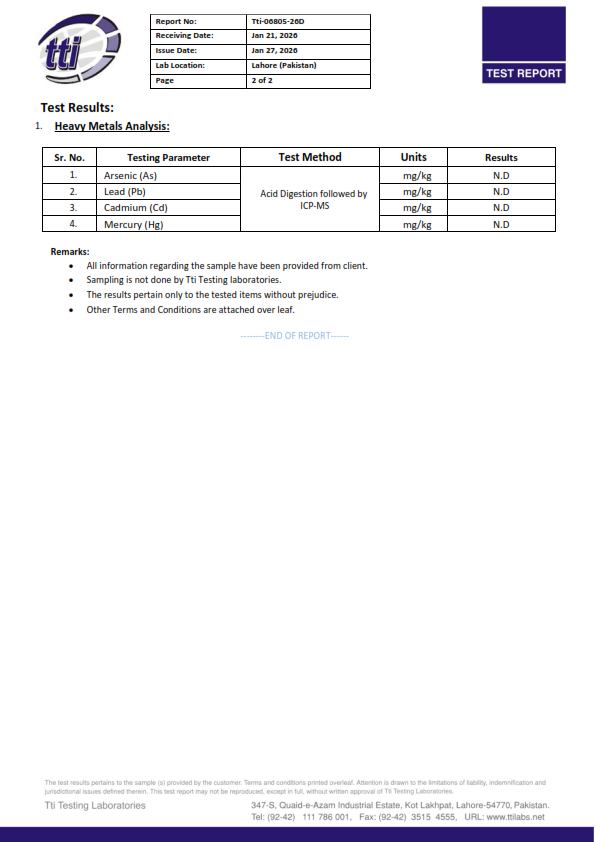
How to read a lab report
This is one of our own reports. You don’t need a science background to get something useful from one like it. Here’s what to look at.
Who tested it, and what. Look for the lab’s name, the test date and a sample description that matches the product.
Heavy metals. Check the results for lead, arsenic, cadmium and mercury, and what limit each is being compared against. A result means little without a limit beside it.
Microbes and mould toxins. These tests look for bacteria, yeast and mould, plus aflatoxins, which are toxins some moulds produce.
Fulvic and humic acid. These show how much of each is in the sample, usually as a percentage. Compare the percentage with what the brand claims.
From mountain to jar
Most buyers never see how Shilajit is made, so here is our own footage. Ours is collected by hand in Gilgit-Baltistan before it reaches these stages.
Purifying
Raw material contains rock and soil. Water and filtering are how those get separated out.
Sun drying
The liquid slowly thickens in the sun until it becomes resin again. This stage can’t be rushed.
Packing
Each jar gets sealed with a batch number, which is what connects it back to its lab report.
Latest from the blog
- What “Himalayan” Means on a Shilajit Label, and How to Check It
 “Himalayan” covers a huge area across several countries. Here’s what the word does and doesn’t tell you, and how to check where Shilajit really comes from.
- 7 Questions to Ask a Shilajit Brand Before You Buy
 A short list of questions to send any Shilajit brand, with what a useful answer looks like and which replies should make you pause.
- What a Shilajit Heavy Metals Result Actually Tells You
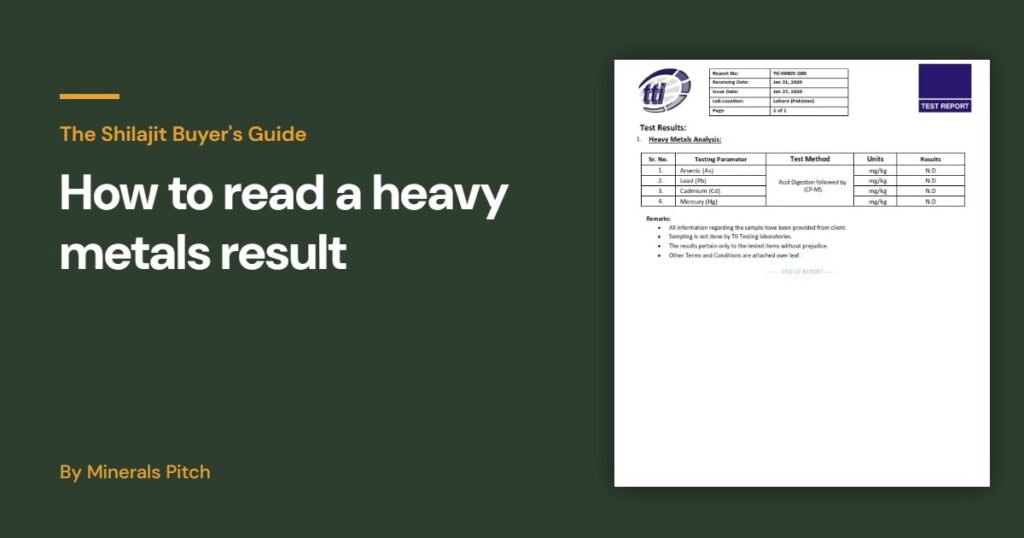 How to read a Shilajit heavy metals report, turn the numbers into a daily amount and spot what a brand hasn’t told you.
Who’s behind this site
We’re not an independent reviewer, and we’d rather you knew that up front. This site is published by Minerals Pitch, a Shilajit brand run by Neutrisa Ltd in the UK, with a sister company in Abbottabad, Pakistan. We sell Shilajit, so read our guides with that in mind and use the same checks on us as on anyone else.
A note on safety: Shilajit isn’t suitable if you’re pregnant, breastfeeding or under 18. If you have a health condition or take anything on prescription, speak to your doctor first. Shilajit is a food supplement and isn’t intended to diagnose, treat, cure or prevent any disease. This site offers general information, not personal health advice.
Minerals Pitch
Shop
Lab reports
Certificates
© 2026 Neutrisa Ltd. All rights reserved.